
What It Really Takes To Succeed As A Solo Business Owner
March 16, 2026


Starting an online store as a solopreneur in 2026 is no longer about hacking growth or chasing shiny tactics. It’s about understanding how modern ecommerce actually works – and building a hands-off business that removes friction instead of adding it.
Today, you can launch faster than ever. But speed without clarity leads to half-built stores, unsold products and abandoned projects. This guide focuses on concrete actions, real decisions and practical steps you can follow without prior experience.



Let’s be honest: most people don’t fail in ecommerce because the model is broken. They fail because they underestimate how much clarity matters in the early stages.
In 2026, starting an online store makes sense for one simple reason – the infrastructure is no longer the hard part. Payments, hosting, design, automation, even fulfillment are solved problems. What matters now is how well you make decisions.
Outline your first idea today and click to launch – don’t wait for the perfect moment.Ten years ago, launching an online store meant hiring developers, dealing with fragile plugins and sinking money into tools before you even knew if anyone wanted your product. That friction filtered people out. Now you can do everything as a solopreneur.
An online store is not a local business with a website. It’s a global business by default.
That changes how you should think about products. The best first products are easy to understand across cultures, simple to deliver and not dependent on local regulations or shipping constraints.
This is why AI powered digital products and lightweight physical goods dominate beginner success stories. They travel well.
You decide how your store looks, what you sell, how you price your products, and how you grow. You control your brand, your customer relationships, and your long-term strategy.
That level of ownership gives you freedom. It lets you develop the business in any direction you choose and turn it into a real asset you control.

Solopreneurship doesn’t require large upfront costs or constant personal involvement. Once the online store is set up, it can generate income without you needing to be online all the time.
You’re not trading hours for money. With the right setup, the store keeps working in the background, giving you the opportunity to earn more without increasing your workload and build a sustainable source of passive income over time.
The goal isn’t to work less immediately. It’s to avoid building something that traps you later. Start by automating one repetitive task today – even an easy flow in place now will free hours later and let you focus on growing your store hands-off.
This is where you lay the foundation for your store’s success. Instead of guessing, focus on problems that people are actively looking to solve. Observe real behaviors, listen to real needs, and you’ll discover opportunities that are already proven.
A niche isn’t just a theme or an interest – it’s a specific situation where people are happily investing in solutions that improve their lives, save time, or make something easier.
Your experience matters because it helps you understand nuance. It does not guarantee demand.
If you’ve worked in a field, struggled with a process or solved a recurring problem, that’s a good starting point. But the market decides whether it’s viable.

The right mindset here is curiosity, not attachment.
Instead of asking, “What can I sell?” ask, “What do people already pay for that I understand better than most?”
The clearest signs of real demand come from unfiltered, honest conversations. Places where people vent frustrations, share struggles, or talk about what disappoints them are goldmines for insight.
Reddit threads often contain detailed stories of problems and failed solutions – these are more revealing than surveys or promotional posts. YouTube and TikTok comments show what genuinely resonates with people on an emotional level. Amazon and Etsy reviews are especially useful: they highlight where products overpromise, underdeliver, or leave gaps.
The key is to notice patterns. A single complaint can be an anomaly, but the same frustration repeated across multiple posts, reviews, or videos signals a real, solvable problem. Track these trends and use them to guide your niche selection and product ideas.
Start making money from day one with AI powered products!
Data can guide you, but it’s your insight that makes it meaningful. Tools like Google Trends show whether interest is growing or fading, but don’t panic if numbers are steady – consistency can be better than hype.
Keyword research tells you what people are looking for, but context matters. Look for searches that hint at urgency or dissatisfaction: phrases like “alternative to,” “best way to,” “how to fix,” or “worth it” show that someone is actively trying to solve a problem.
Think of data as a compass, not a map. For example, if Google Trends shows steady searches for “home workout routines,” that indicates consistent interest, even without a spike. If people are searching for “best way to get rid of back pain at home” or “alternative to expensive gym memberships,” that signals urgency and a willingness to spend.
You still need to interpret what these users actually need – maybe it’s equipment, digital guides, or coaching – to find the right product opportunity.
Become your own boss without a steep learning curve.A truly profitable niche isn’t just an idea that sounds good – it has real, measurable demand and can become your hands-off business.
There are three key traits to look for:
When these elements are present, your selling is no longer about convincing someone to buy. Instead, it’s about showing that your solution directly addresses a problem they already feel – positioning your product as the natural, obvious choice.
Once your niche is defined, choosing the right product becomes a strategic move rather than a guess. The key is aligning the product type with your resources, risk tolerance, and long-term business goals.
Digital products remove the traditional barriers beginners face – no inventory, no shipping logistics, and instant delivery. However, the market has evolved beyond standard files. To succeed today, you shouldn’t just sell information; you should provide AI-powered tools that solve your customer’s problems in minutes.
The key difference is the shift from “passive” content to “active” solutions:
A high-converting AI product solves a single, specific pain point through technology rather than just teaching a skill. Here are examples of how modern AI Toolkits outperform traditional digital goods:
Physical products feel tangible and familiar, which can lower buying resistance. People understand what they’re getting.
The complexity lives behind the scenes. Inventory, fulfillment, returns and quality control all introduce operational risk.
This model works best when logistics are outsourced or simplified. Print-on-demand, dropshipping with strict supplier standards or third-party fulfillment reduce exposure.
If you touch the product yourself at the beginning, do it to learn – not to scale.
Subscriptions are a powerful way to build steady revenue by focusing on retention instead of constantly chasing new customers. They succeed when each payment delivers ongoing value – whether it’s exclusive content, regular updates, community access, or product replenishments.
For beginners, subscriptions usually make sense as a second step. Start with one-time digital products to validate interest, then consider turning your successful offerings into a subscription model.
Think of it like this: a customer who loves your digital product might be willing to pay monthly for templates, guides, or tools that keep delivering results. Recurring revenue rewards consistency, not hype.
If your digital product solves a real, repeatable problem, brainstorm a subscription version today. Could you offer weekly templates, monthly guides, or continuous access to tools that keep users engaged? Start small, automate delivery, and watch your digital products grow into a steady income stream.

By the time you’ve defined your niche and chosen your personalized AI product, the next big decision is where to sell. This isn’t just a technical choice – it determines your control, margins and long-term growth potential.
Marketplaces are attractive because they bring traffic to your product automatically. The audience exists, and people are already searching to buy.
But that convenience comes at a cost. You give up branding control, customer data and pricing freedom. Fees scale with success, and your product competes directly with dozens of others in the same category. The platform sets the rules, not you.
Owning your store means owning your business. You control the layout, pricing, customer journey and branding. Growth is slower at first, but every improvement compounds, and every customer you acquire belongs to you.
You can start solo. A small, functional store is enough to validate demand and learn how people interact with your products. The key is to automate repetitive tasks: orders, inventory updates, emails, payment processing.
Action step: Choose an ecommerce platform that handles operations in one place. Avoid stitching multiple tools together – complexity kills momentum.
Earn with Ecomzy’s prebuilt store!Marketplaces are like renting attention. Fast traffic, easy access, high competition, fees that rise with success. Ideal for early testing and exposure, risky for building a long-term business.
Your own store is like owning a property. Slower traffic at first, more responsibility, more control, and growth that compounds. It’s the path to an asset, not just income.
Think of marketplaces as accelerators for validation. Think of your own store as the foundation for a real business.
Your platform should simplify decisions, not create them. The right online store lets you focus on building your business instead of wrestling with tech.
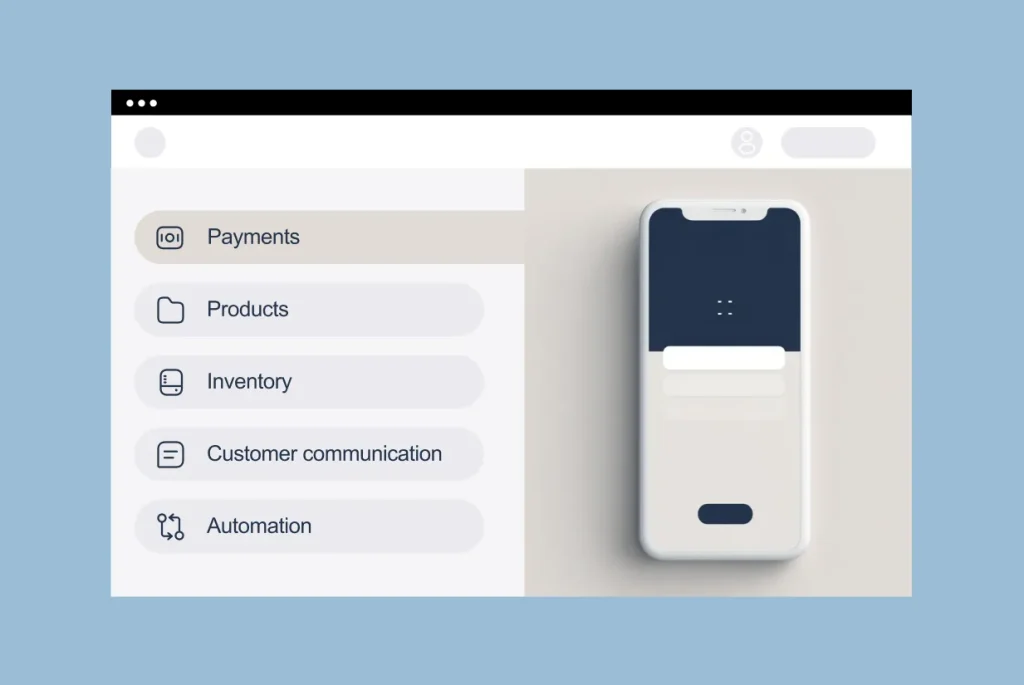
Your platform should actively solve problems, not just store your products. It needs to manage every core operation seamlessly so you can focus on growth. That means:
A strong platform doesn’t just store data – it actively runs your business smoothly and gives you time to focus on strategy, marketing, and improving customer experience.
Ecomzy is an all-in-one platform designed for solopreneurs who want clarity from day one. Instead of juggling multiple tools, you can launch quickly and confidently. Every essential function lives in one place: products, orders, inventory, automation, and customer communication.
Here’s what Ecomzy gives beginners immediately:
Start with a platform that actually removes friction. Start your first Ecomzy store today and focus on understanding your customers, improving your offers, and growing your business steadily – without getting bogged down by technical headaches.
Launch your first Ecomzy store todayEven good ideas can fail when execution lags. Beginners often stumble in predictable ways:
The simplest, most reliable path to success is clear: validate your niche, choose a product that solves a real problem, pick the right platform like Ecomzy, launch quickly, and improve continuously. Talent or luck matters far less than tools, clarity, and consistent action.
Starting an online store in 2026 is easier than ever, but success comes to those who act deliberately. Focus on validating real problems, choosing the right products, using a platform that removes friction like Ecomzy, and iterating based on real feedback. Tools, clarity, and consistent action are your greatest advantages.

Subscribe to our blog and get free ecommerce tips, inspiration, and resources delivered directly to your inbox.
Get a complete, ready-to-go ecommerce store with automated promotion – and start selling in minutes.