
You may have searched for ways to make money online and found more ideas than clear explanations. If you have limited time or money, compare what each model requires before choosing one.
That’s what this is for.
Ten solopreneur business ideas, with an explanation of the work and limitations of each. Some require specialist skills or qualifications; use the list to identify what you need to learn, not as a promise that every option is ready to launch today.



What running a business solo involves
Starting a business alone gives you responsibility for the decisions as well as the work. Assess its costs and risks alongside the appeal of independence.
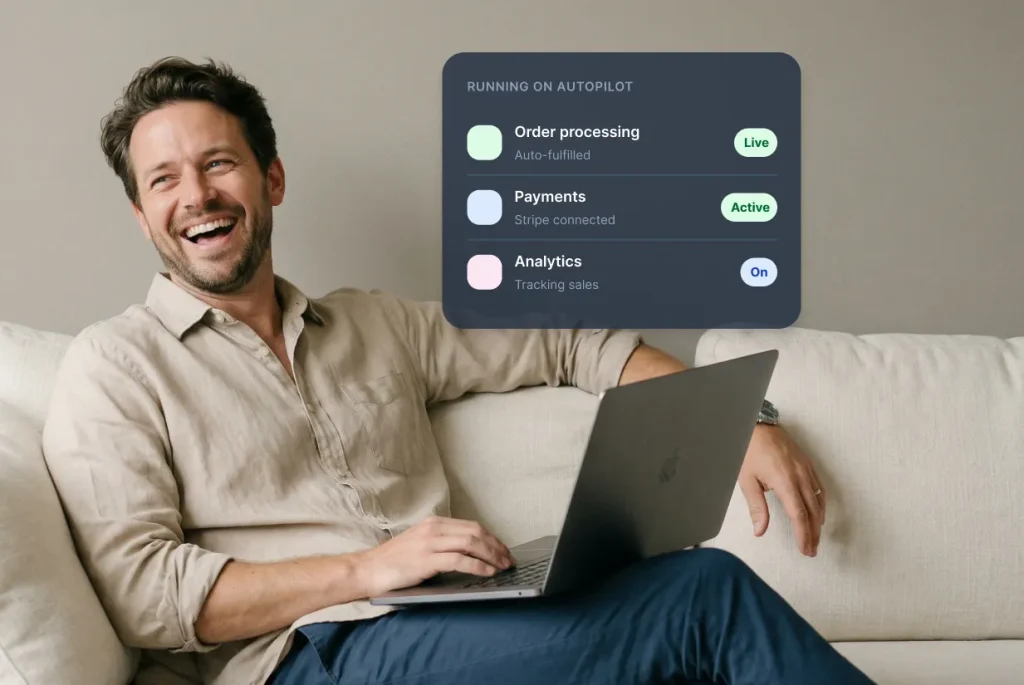
Tools can handle some repetitive steps, such as payment processing, order records and customer notifications. Their scope depends on the service and settings.
Before choosing an online business, consider the time needed for product review, promotion, customer support and expense checks.
As a solo business owner, you make the decisions and manage the workload. Tools and automation can help with selected tasks, but they do not remove every expense or responsibility.
Here are some practical features of solo online work to consider:
- Low startup costs
An online model may avoid renting an office or hiring a team at the outset. Costs vary by model; set a budget you can afford before committing money or time.
- Only one decision-maker – you
As a solo owner, you can choose what to build and when to change direction. Your decisions in the online market still need to account for customers, service terms and other obligations.
- You are your own boss
You can plan how you organize your day, while allowing for customer needs, deadlines and other responsibilities. The flexibility available depends on the business.

- Understand ownership and the terms
Before choosing your store setup, review what you own and the terms for using its platform, products and customer information. Sales revenue is not all profit: account for applicable charges and business expenses.
- Work from anywhere
Online tools can make remote management possible. Check access requirements and supported locations, and plan how you will handle customer questions while away.
- Repeated sales without physical restocking
A digital product can be sold repeatedly without replenishing physical stock. More activity can still mean additional support, service costs and monitoring.
These features can make a solo model worth exploring. Compare them with the skills, time and budget required for the particular business.
Explore a prepared store and review the work involved!10 business ideas you can start solo
A solo business lets you choose a direction without first building a large team. The options below involve different kinds of work and preparation.
Use the ten ideas below to compare their practical requirements with the resources you have available.
1. Starting an online store
Here’s a question worth sitting with: what do people actually Google at midnight when they’re stressed, exhausted and out of ideas?
Not “ecommerce platforms.” Things like:
- “How do I get my electric bill down this month”
- “My kid refuses to eat – what do I do”
- “I have 20 minutes a day – can I actually get fit”
- “How do I ask for a raise without losing my job”
These are examples of questions people may want help with. When considering AI-powered tools, check actual customer needs and the product’s capabilities rather than assuming that a topic guarantees demand.
Here’s how it works.
A customer buys access to a tool and supplies information relevant to their task. The tool may generate material based on those inputs; the customer needs to check the result before using it.
The value depends on what the tool actually provides and whether it fits the customer’s task.
A personalized draft is material to review and adapt, not a guaranteed solution to the underlying problem.
Illustrative uses may include the following. Check the actual product description for supported features and limitations:
- Bill-discussion tool – may draft questions or a negotiation script from information the user supplies. It does not guarantee a lower bill.
- Meal-planning tool – may draft menu ideas and a shopping list from preferences. The user still needs to check dietary needs and suitability.
- Activity-planning tool – may organize routine ideas from the user’s goals and available time. It is not a medical assessment or a guaranteed fitness result.
- Negotiation-preparation tool – may draft talking points from the user’s role and experience. The user reviews their accuracy; an employer’s response is not guaranteed.
After a purchase, payment and delivery tools can provide access to the AI product. The buyer supplies inputs and reviews the output; the owner monitors orders and helps with access or other customer questions.
There are no physical parcels to ship, but customer support and routine management remain part of the work.
Your storefront can remain accessible while you are offline. That availability does not create demand or replace promotion.
2. Freelance writing and content creation
If you enjoy writing, consider services such as blog posts, social content, newsletters and website copy. Build relevant examples and research what prospective clients need.
You can begin by preparing a portfolio and planning outreach. Check the tools, skills and costs needed for the services you intend to offer.
The honest downside: service work depends on finding clients and allowing enough time to deliver the agreed work. Payment terms and workloads vary.
3. Online tutoring and teaching
Teaching requires knowledge of the subject and a suitable way to help students learn. Check any qualifications or other requirements that apply.
School subjects, languages, coding, music and exam preparation are possible areas to research. Online sessions can help you reach students beyond your local area, subject to language, access and relevant requirements.
What works well:
- Lessons can be delivered online, with preparation still required
- Student progress can be reviewed over time
- Works well for building reputation and referrals
The honest catch: tutoring usually requires scheduled preparation and teaching time, as well as finding and supporting students.
4. Solving problems and taking on small consulting projects
Consulting involves applying relevant expertise to a client’s problem. Define the work you are qualified to do and agree on its scope before taking a project.
Help a small business streamline a process. Advise on a workflow. Figure out why something isn’t working. Every problem you solve builds your confidence, sharpens your thinking and adds to your track record.
This is hands-on work with responsibilities to the client. Consider the preparation, costs and risks involved rather than treating it as a risk-free way to learn.
5. Building a content-based online business
A blog, a YouTube channel, a podcast, a newsletter. The goal isn’t just to post – it’s to build an audience that trusts you and returns.
Older content may continue to bring people to a site if it remains useful and discoverable. Audience growth is not automatic or tied to a fixed timetable.
Possible monetization routes, subject to their terms and eligibility requirements, include:
- Display ads and sponsorships
- Affiliate commissions
- Your own digital products or courses
The honest catch: producing content requires ongoing work, and building an audience does not guarantee revenue.
6. Affiliate marketing
Affiliate marketing involves recommending products and receiving a commission for qualifying purchases under the program’s terms. The seller generally handles fulfillment, while you manage the content and required disclosures.
What works well:
- An existing blog, channel or social account can be a place to publish recommendations
- No physical stock to purchase, with other costs to assess
- Low operational complexity
The honest catch: the program sets its commission and participation rules. Review those terms and how changes may affect your work.
Get your FREE Ecomzy store and explore your catalog.7. AI and machine learning consulting
AI and machine learning consulting may involve helping companies implement existing tools, assess automation tasks or analyze data. You need relevant knowledge and a clear understanding of the tool’s limitations and the client’s requirements.
The challenge is that this work is usually time-dependent. Each client requires your attention, and scaling beyond a certain point requires either higher rates or more work hours. Still, it’s a great way to turn specialized knowledge into a business without needing a team.
8. Graphic design and web design
Graphic and web design involve creating materials for organizations or individuals. Research the customers you want to serve and the skills their projects require.
As a solopreneur, you can turn these skills into a business by helping companies build logos, websites, landing pages, marketing materials, social media graphics, or even branding packages.
Design projects can produce tangible deliverables such as a website, logo or set of marketing materials. Agree on requirements and review the finished work with the client.
Successful designers find ways to turn their skills into products or semi-automated services. For example:
- Templates and design assets – Create materials that can be sold repeatedly, subject to your rights to the assets. Updates and customer support may still take time.
- Pre-made websites or landing pages – Build ready-to-go website packages for a niche (e.g., fitness coaches, photographers, small retailers) that clients can purchase and customize.
- Design bundles – Combine multiple assets like icons, fonts, and graphics into a package, then sell them on marketplaces or your own store.
9. Live streaming and content monetization
Live streaming has become a real opportunity, especially for creators who enjoy interacting with an audience in real-time. Platforms like YouTube, Twitch, or Instagram Live allow you to share knowledge, entertain, or build communities directly.
Possible monetization routes include donations, sponsorships or selling products, subject to platform rules and eligibility. Live streams let you receive feedback and interact directly with viewers.
Choose a streaming schedule you can maintain and review audience feedback. Revenue depends on the audience, offer, platform requirements and costs.
10. App development
An app can serve multiple users, but development, maintenance and support still require work.
Developing a useful app involves planning, building, testing and ongoing maintenance. Paid downloads or in-app purchases are possible models to assess, not assured revenue.
What works well:
- The same app can serve multiple users, with service and support needs to monitor.
- Multiple monetisation options.
- Check your rights to the code, content and other assets used in the app.
The honest catch: the gap between “idea” and “working product” is wider than most people expect. Execution is everything.
So which idea is actually right for you?
These are ten options to research when considering a solo business. Whether a particular one earns money depends on its customers, execution and costs.
Each model asks for different resources and preparation:
- Freelancing and tutoring – need time you can show up for consistently.
- Consulting – requires relevant expertise and a clear scope of work.
- Content creation – requires production and audience-development work, without a fixed time to revenue.
- App development – requires suitable technical skills, testing and maintenance.
If you have a job, family or limited hours, compare these requirements with your circumstances before committing resources.
A prepared ecommerce store changes some of the creation work:
- A prepared website reduces creation work, with tools still to learn.
- You can plan your work around customer and operating requirements.
- Finding prospective customers remains part of the work.
- No need to code the prepared website yourself; review its settings.
The storefront can remain accessible online. After a purchase, order tools can deliver access to an AI product; the buyer supplies inputs and reviews its output.
Why consider a prepared online store when starting solo

A prepared online store reduces some creation tasks while leaving ongoing work for the owner.
A ready online store provides a storefront, catalog and tools for routine order steps. You still need to plan promotion, help customers and check expenses.
Review the platform and product terms before assuming you own every asset or can use it without restrictions.
Review the prepared store and decide whether it fits your plans.You don’t need to go Solo with Ecomzy
Website and catalog preparation can be difficult when you are starting alone. It helps to separate work the provider handles from decisions and checks that remain yours.
Ecomzy provides a prepared starting point.
The storefront is free. Review the included tools and support, and check the fees and conditions for payment or optional promotion services before using them.
- A prepared storefront
You do not start with a blank screen. The design, structure and product pages are prepared. Check your account details, payment settings and customer access before promotion.
Ecomzy reduces the work of building a website from scratch. Use the prepared pages to understand what the customer will see and what still needs attention.
- A prepared digital catalog
Ecomzy provides a catalog, so you do not need to create every product yourself.
Learn the features, prices and limitations of the digital AI-powered products before deciding which ones to promote. A prepared catalog does not guarantee demand.
- Store tools to learn
Explore the dashboard and learn which controls and information are available. Ask about settings you do not understand.
Learning one function at a time can help you organize the questions you need to resolve.
- Tools for routine order steps
Routine payment and access-delivery steps can be automated after a purchase. Monitor orders and know how to respond if something does not work as expected.
Your store can remain available while you are offline, with customer questions and exceptions for you to address.
- Real support when you need it
Ask Ecomzy how to contact support and what assistance includes.
Use the available guidance to resolve questions about the setup and tools.
Your first step matters more than the perfect idea
Use a clear starting point to identify what you still need to learn and which requirements to check.
Solopreneurship combines decision-making with responsibility for the work and costs. Sales and profit are not guaranteed.